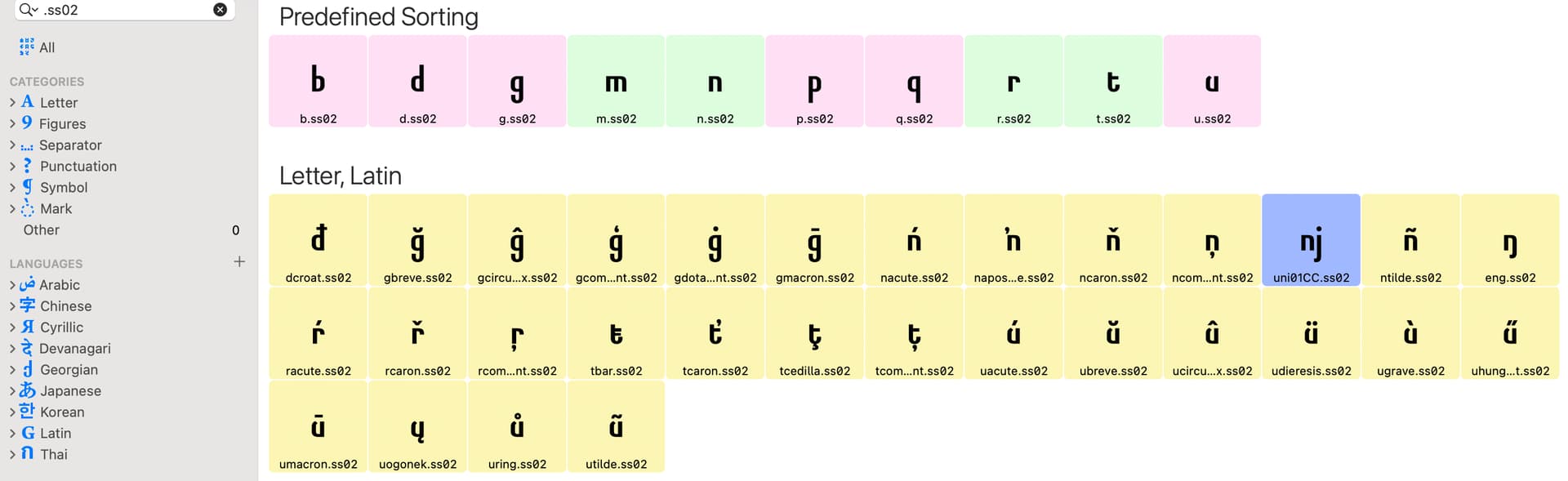
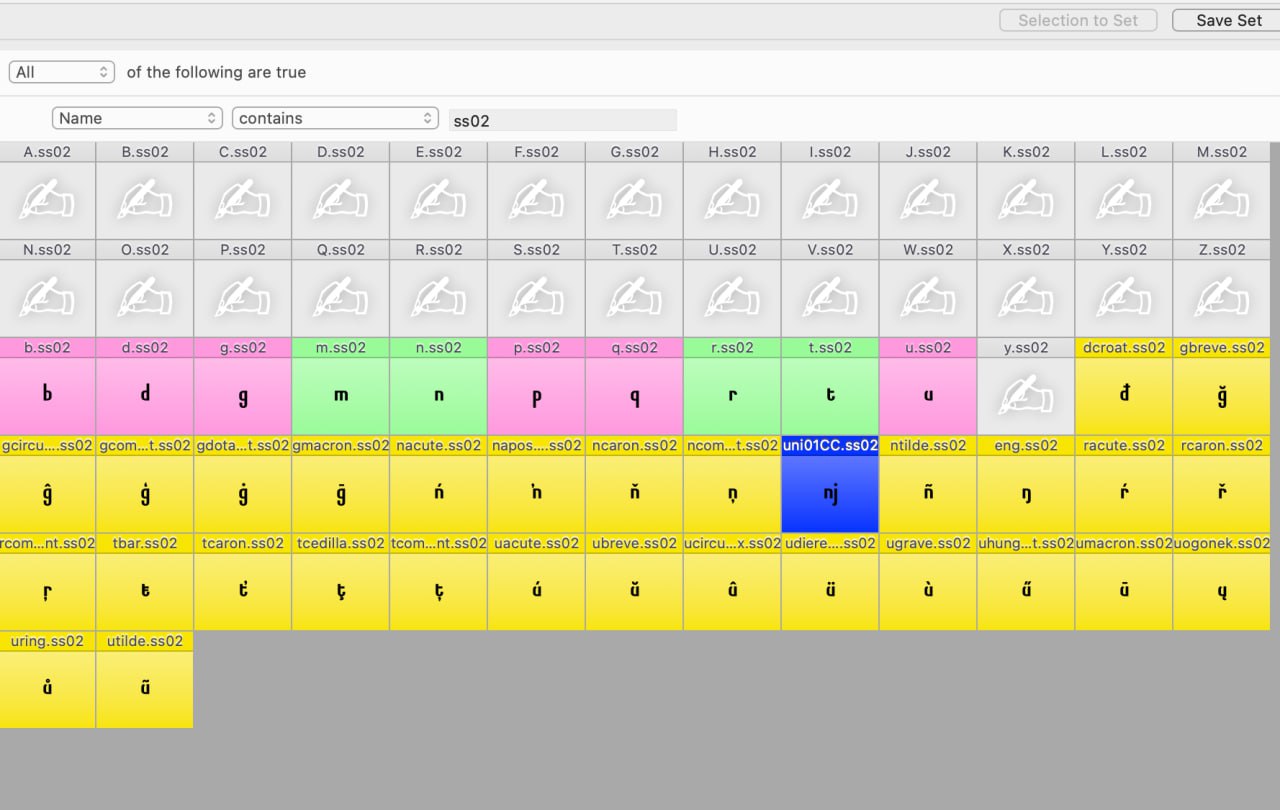
I’m working with a .ufo file. When glyphs are deleted in Glyphs, their corresponding files are removed from the “glyphs” directory, but their entries remain in lib.plist. As a result, when the same file is opened in RoboFont, empty glyph cells appear for those deleted glyphs.
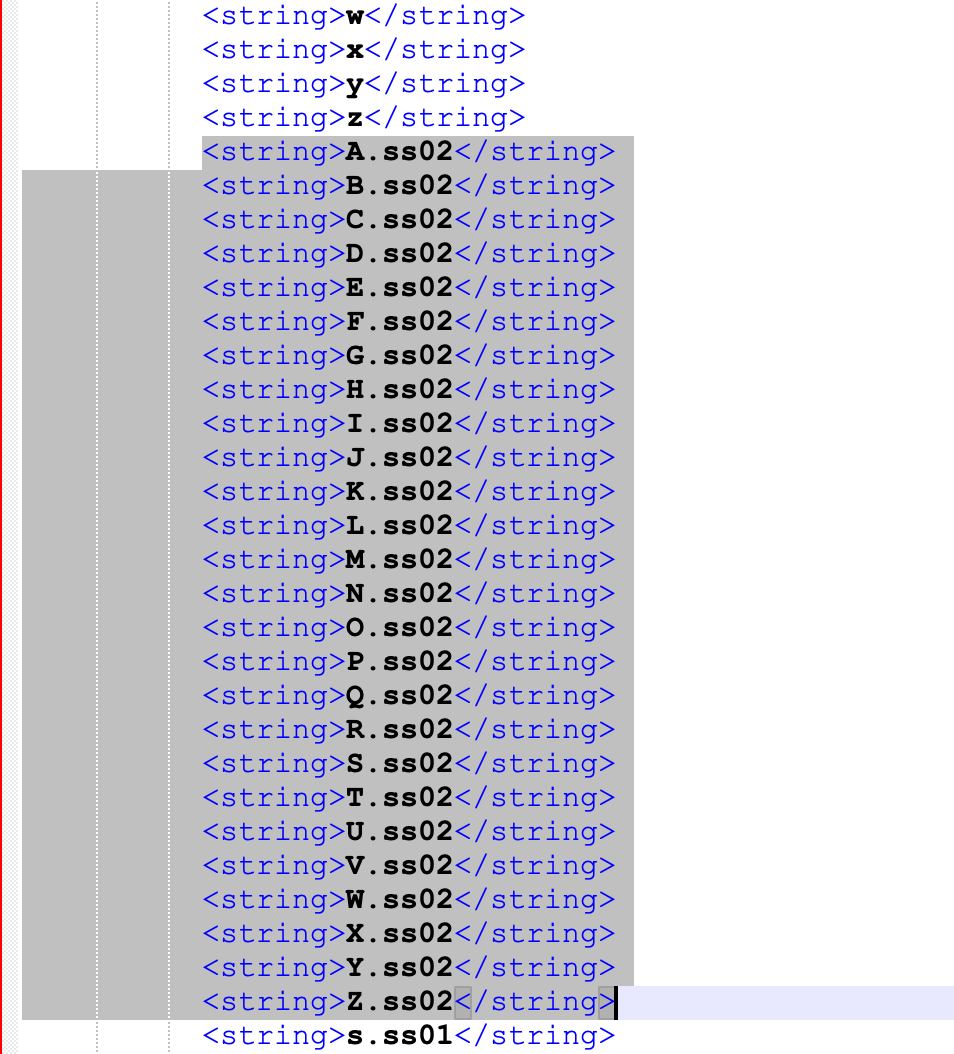
In what entry in lib.plist do the glyph names remain?
Could you send me the file?
Sure, here is the file
TEST_FILE.ufo.zip (355.6 KB)
Thanks for the file. RoboFont seems to add all glyphs that are in the public.glyphOrder. But that is clearly agains the .ufo spec:
public.glyphOrder
This key is used for representing the user’s preferred glyph order in the font. Authoring tools may use this order for displaying glyphs to the user or setting the glyph order in binaries created with the font data. However, authoring tools are not required to use this order in any way. This data is optional.The glyph order is stored as a list of glyphs names. Glyph names must not occur more than once. Glyph names in the font may not appear in the order. The order may contain glyphs that are not in the font.

Okay. So what is the problem now? You don’t like the way RF is handling the glyphOrder?
My problem is that when I delete glyphs in GlyphsApp, I still see their cells in RoboFont. Both forums told me that the issue isn’t on their side, so I don’t know what to do next to achieve consistency in the glyph list
I don’t understand how a quote from the spec is “a personal opinion”. The spec clearly says that public.glyphOrder may contain glyphs that are not in the font. It says that tools may use the order for displaying glyphs to the user – it says nothing about adding nonexistent glyphs to the font just because they appear in this key. Unless the grey placeholders don’t indicate that these glyphs exist in the font, I don’t follow Frank Grießhammer’s argument.
(Cross-posted in the Discord thread as well.)
Someone was quick and confirmed that the grey placeholders are not empty glyphs, but template glyphs, which are not actual glyphs in the file.
Yes. Robofont displays template cells for glyphs listed in the glyph order, which may or may not coincide with what is in the font; Glyphs only displays cells for glyphs that are actually in the font. I do not think there is an actual problem, it is just the different approaches of the apps.